
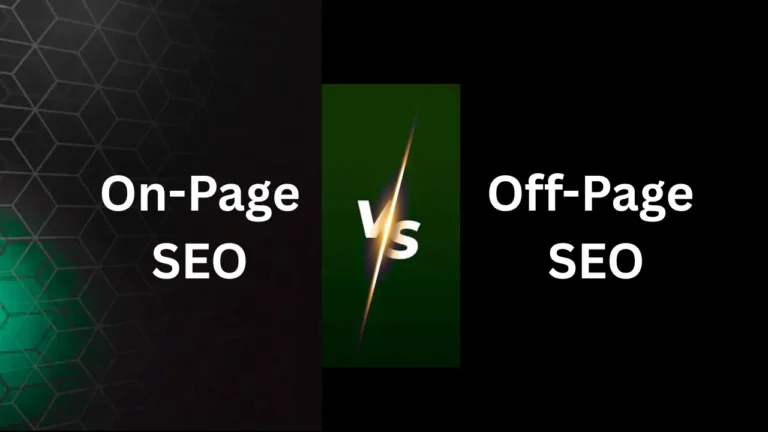
When it comes to improving your website ranking on search engines, understanding the difference between On-Page SEO vs Off-Page SEO is essential.
Many beginners focus only on content or only on backlinks, but the truth is that both are equally important. If you want consistent traffic, better rankings, and long-term growth, you need a balanced SEO strategy.
In this guide, we will break down On-Page SEO and Off-Page SEO, their key differences, and how you can use both to grow your website.
What is On-Page SEO?
On-Page SEO refers to all the techniques you apply within your website to optimize it for search engines and users.
It helps search engines understand your content and improves user experience.
Important On-Page SEO Factors
- Keyword Optimization
Use your focus keyword naturally in title, headings, and content. - High-Quality Content
Content should be useful, relevant, and easy to read. - Meta Tags Optimization
A strong title and description improve click-through rate. - URL Structure
Short and keyword-rich URLs perform better. - Internal Linking
Linking to other pages improves navigation and SEO. - Mobile-Friendly Design
Your website must work perfectly on mobile devices. - Page Speed Optimization
Fast-loading websites rank higher.
👉 Optimizing content, speed, and structure is part of On-Page SEO. If you need expert help, explore our WordPress SEO optimization services.
What is Off-Page SEO?
Off-Page SEO includes all the activities performed outside your website to improve its authority and credibility.
Search engines use these signals to decide how trustworthy your website is.
Important Off-Page SEO Factors
- Backlinks (Most Important)
Links from other websites act as trust signals. - Guest Posting
Writing content for other websites helps build authority. - Social Media Sharing
Promotes your content and brings traffic. - Brand Mentions
Even without links, mentions help SEO. - Influencer Outreach
Collaboration increases visibility.
👉 Building high-quality backlinks is essential. Our digital marketing services can help improve your website authority..
On-Page SEO vs Off-Page SEO: Key Differences
| Feature | On-Page SEO | Off-Page SEO |
| Location | Inside website | Outside website |
| Purpose | Improve content & structure | Build authority & trust |
| Control | Full control | Limited control |
| Examples | Keywords, meta tags | Backlinks, shares |
Why Both On-Page and Off-Page SEO Matter
Many people ask: Which one is more important?
The answer is simple — both are essential.
- On-Page SEO ensures your website is optimized and understandable
- Off-Page SEO ensures your website is trusted and authoritative
Without On-Page SEO, your content may not rank.
Without Off-Page SEO, your content may not gain authority.
👉 To get better results, combine both strategies or get help from our SEO services and website development services.
How to Combine On-Page and Off-Page SEO
Here is a simple strategy you can follow:
- Do keyword research before writing content
- Optimize titles, headings, and content (On-Page SEO)
- Publish high-quality and valuable articles
- Build backlinks through outreach and guest posting
- Share content on social media platforms
- Improve website speed and user experience
Common SEO Mistakes to Avoid
- Keyword stuffing
- Low-quality backlinks
- Ignoring mobile optimization
- Duplicate content
- Slow website speed
Avoiding these mistakes will improve your SEO performance.
Conclusion
Understanding On-Page SEO vs Off-Page SEO is crucial for building a successful website.
On-Page SEO helps optimize your content and structure, while Off-Page SEO builds your website authority and trust.
If you want higher rankings and consistent traffic, focus on both strategies together instead of choosing one.