If you own a small business and someone nearby searches for your service on Google do you show up?
If the answer is no, you are losing customers every single day to your competitors. The good news is there is a solution, and it is called Local SEO.
In this guide, you will learn exactly what local SEO is, how it works, whether it still delivers results in 2026, and how your small business can benefit from it starting today.
Table of Contents
- What Is Local SEO?
- Local SEO vs Regular SEO — What Is the Difference?
- How Does Local SEO Work?
- 5 Key Elements of Local SEO
- Why Is Local SEO Important for Small Businesses?
- Does Local SEO Still Work in 2026?
- How Local SEO Helps Small Businesses — 5 Real Benefits
- How to Get Started with Local SEO
- How Long Does Local SEO Take to Work?
- Frequently Asked Questions
- Final Thoughts
1. What Is Local SEO?
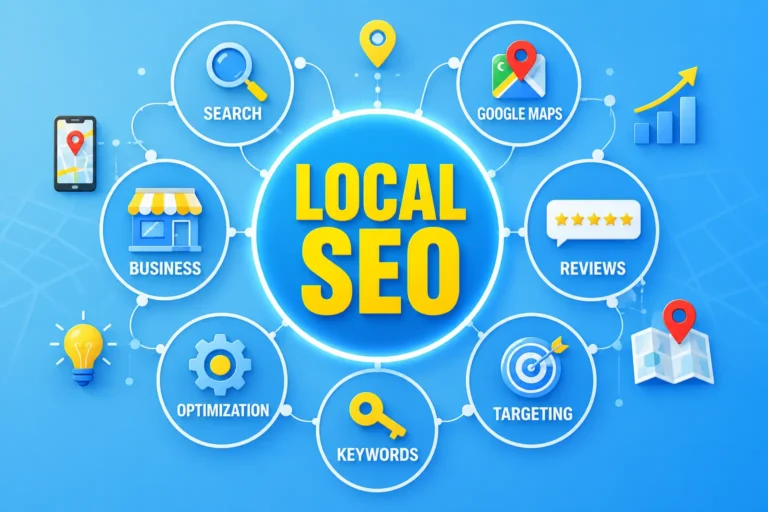
Local SEO (Local Search Engine Optimization) is the process of optimizing your online presence so that your business appears when people nearby search for your products or services on Google.
For example, when someone types:
- “web designer near me”
- “SEO services in [city name]”
- “best digital marketing agency near me”
Google shows a special section called the Local Pack three business listings with a map, phone number, and reviews right at the top of the search results.
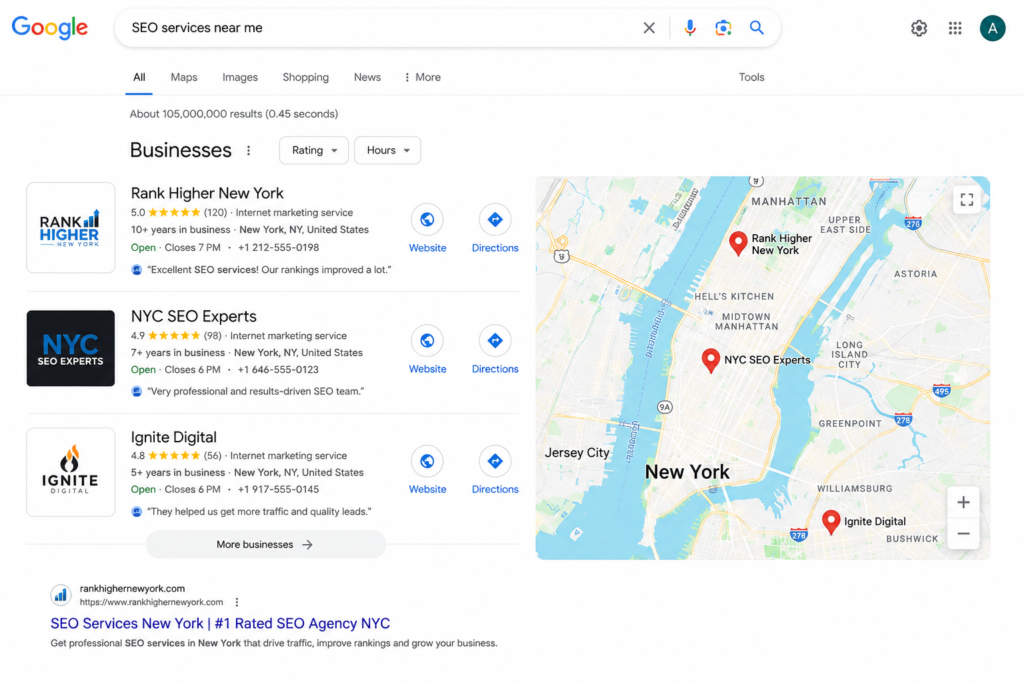
Local SEO is what gets you into that Local Pack.
Unlike regular SEO, which targets a global or national audience, local SEO focuses on people searching in your specific city, town, or service area. This means the traffic you get from local SEO is highly targeted these are real people near you who are ready to take action.
If you want to understand the full picture of how SEO works for your business, read our guide on SEO Services.
2. Local SEO vs Regular SEO — What Is the Difference?
Many people confuse local SEO with regular SEO. Here is a simple breakdown:
| Feature | Regular SEO | Local SEO |
| Audience | Global or national | Local area / nearby customers |
| Search Example | “what is digital marketing” | “digital marketing agency near me” |
| Google Feature | Blue link results | Local Pack + Map results |
| Best For | Blogs, eCommerce, SaaS | Local service businesses |
| Main Tool | Website content + backlinks | Google Business Profile + reviews |
If your business serves local customers whether you are a dentist, restaurant, plumber, or marketing agency local SEO is more important than regular SEO for driving real leads.
3. How Does Local SEO Work?
Google uses three main factors to decide which businesses show up in local search results:
Relevance — How closely does your business match what the person is searching for? If someone searches for “SEO services,” Google checks whether your business profile and website mention SEO services clearly.
Distance — How close is your business to the searcher? Google uses the person’s location to show the nearest relevant businesses first.
Prominence — How well-known and trusted is your business online? This includes your Google reviews, backlinks, and how complete your online presence is.
When you optimize for these three factors, you increase your chances of appearing in front of local customers at the exact moment they are ready to buy.
4. 5 Key Elements of Local SEO
Google Business Profile (GBP)
Your Google Business Profile is the single most important asset in local SEO. It is the listing that appears in Google Maps and the Local Pack when customers search for your services.
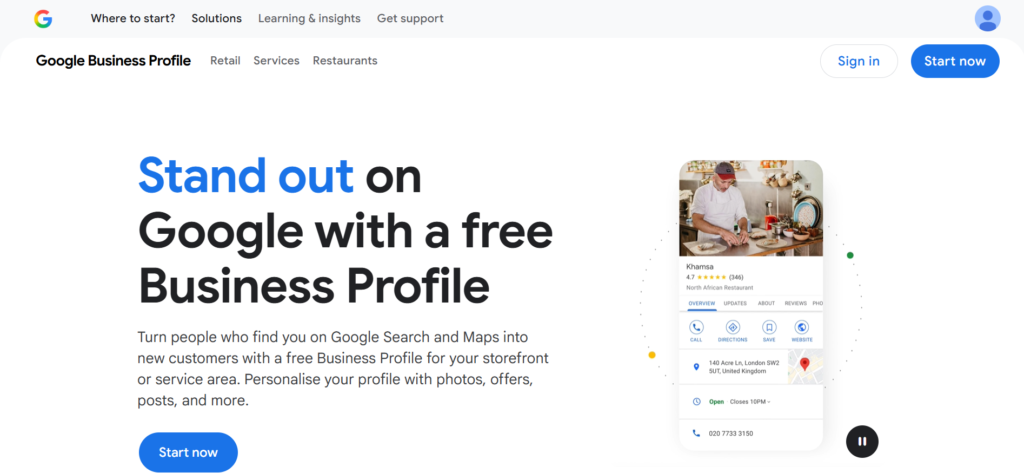
A fully optimized Google Business Profile includes:
- Correct business name, address, and phone number
- Accurate business hours
- Clear service descriptions with local keywords
- High-quality photos
- Regular posts and updates
- Customer reviews and responses
According to Whitespark’s 2026 Local Search Ranking Factors, Google Business Profile signals account for approximately 32% of local pack ranking weight — making it your highest-priority local SEO task.
NAP Consistency
NAP stands for Name, Address, and Phone Number. Google cross-checks your business information across the entire web. If your address is written differently on different platforms even small differences like “Street” vs “St.” it can confuse Google and hurt your rankings.
Make sure your NAP is identical on your website, Google Business Profile, Facebook, Yelp and every other directory listing.
Local Keywords
Using the right keywords on your website and Google Business Profile helps Google understand what you offer and where. Instead of just using “SEO services,” use location-specific phrases like “SEO services for small businesses” or “affordable digital marketing for local businesses.”
Want to see how we use local keywords in our own services? Visit our Digital Marketing page.
Customer Reviews
Reviews are one of the strongest trust signals in local SEO. According to BrightLocal’s 2026 Local Consumer Review Survey, 87% of consumers read online reviews before choosing a local business, and 68% will not consider a business with less than a 4-star rating.
Encourage happy clients to leave Google reviews. Respond to every review positive or negative. Businesses that respond to all reviews achieve up to 18% more revenue and convert inquiries at 50% better rates.
Local Citations
A citation is any online mention of your business name, address, and phone number on directories like Yelp, Yellow Pages, or industry-specific listing sites.
The more consistent and accurate your citations are across trusted directories, the more credible your business appears to Google, which improves your local rankings. This is also closely connected to Backlink building another powerful way to strengthen your local authority.
5. Why Is Local SEO Important for Small Businesses?
Here are some real numbers that show why local SEO cannot be ignored in 2026, sourced from BrightLocal and Google’s own data:
- 46% of all Google searches have local intent nearly 1 in every 2 searches
- 76% of people who search for something nearby visit a business within 24 hours
- 80% of US consumers search for a local business online at least once a week
- 57% of local searches happen on mobile devices
- 87% of consumers read online reviews for local businesses before making a decision
- 28% of local searches result in a purchase within 24 hours
These are not small numbers. Nearly half of all Google searches are from people looking for something nearby and most of them visit a business the same day.
For a small business, this means local SEO is not optional. It is the most direct path to bringing real customers through your door or to your website.
6. Does Local SEO Still Work in 2026?
This is a question many business owners ask especially with AI search tools like ChatGPT and Google AI Overviews becoming more common.
The short answer: Yes, local SEO absolutely still works in 2026.
Google still processes over 8.5 billion searches every day, and nearly half of those have local intent. Organic search still drives more than 53% of all website traffic globally, according to Semrush’s 2026 traffic study.
Yes, AI Overviews and zero-click results have changed how some search results look. But even AI-generated answers pull from well-optimized, trustworthy local business data. If your Google Business Profile is complete and your website is properly optimized, you benefit from both traditional local rankings and AI-driven discovery.
The businesses struggling with local SEO in 2026 are those that:
- Have outdated or incomplete Google Business Profiles
- Ignore customer reviews
- Have inconsistent NAP information across the web
- Publish no local content
The businesses that are winning are those that keep their online presence accurate, active, and relevant. The fundamentals of local SEO have not changed, only the standards have gotten higher.
7. How Local SEO Helps Small Businesses — 5 Real Benefits
Benefit 1: Get Found by Customers Who Are Ready to Buy
Local SEO attracts people who are already searching for exactly what you offer. When someone searches for an “SEO agency near me,” they are not browsing. They are ready to hire. This is the highest-intent traffic you can get.
Benefit 2: Compete with Larger Brands
Local SEO levels the playing field. A well-optimized small business can outrank a national chain in local search results. Google rewards relevance and local trust not just brand size or advertising budget.
Benefit 3: Free and Long-Term Traffic
Unlike paid ads that stop the moment your budget runs out, local SEO builds visibility that compounds over time. One-time optimization efforts can generate leads for months or years without additional spend.
Benefit 4: Build Trust and Credibility
Appearing in Google’s Local Pack, having strong reviews, and maintaining consistent business information across the web all signal legitimacy to potential customers. Most people trust businesses that rank well on Google. A professional website also plays a big role.
Benefit 5: Drive More Phone Calls, Website Visits, and Walk-ins
Local SEO directly increases the actions that matter most for a small business phone calls, direction requests, website clicks, and in-person visits. These are real customers taking real action.
8. How to Get Started with Local SEO (Simple Steps for Beginners)
You do not need a large budget to start with local SEO. Here are the most impactful steps you can take right now:
Step 1: Claim and Optimize Your Google Business Profile
Go to google.com/business and create or claim your listing. Fill out every field completely, add high-quality photos, and write a clear business description using your target keywords.
Step 2: Make Sure Your NAP Is Consistent Everywhere
Check your business name, address, and phone number on your website, social media pages, and any directory listings. Make sure they all match exactly.
Step 3: Ask Customers for Google Reviews
After completing a job or service, ask happy customers to leave you a Google review. Send them a direct link to make it easy. Respond to every review promptly.
Step 4: Add Local Keywords to Your Website
Make sure your website mentions the services you offer and the locations you serve. Add your city or region naturally in your page titles, headings, and content. Our SEO Services team can help you do this the right way.
Step 5: List Your Business on Key Directories
Make sure you are listed on Yelp, Bing Places, Apple Maps, and industry-specific directories. Use consistent NAP information on every platform.
9. How Long Does Local SEO Take to Work?
Local SEO is not an overnight strategy, but it starts working faster than most people expect:
- Google Business Profile optimization: Results can appear in as little as 30 to 90 days
- Long-tail keyword content: Typically takes 3 to 6 months to rank
- Full local authority: Takes 6 to 12 months of consistent effort
The key is consistency. Businesses that update their profiles regularly, collect reviews continuously, and publish local content on a schedule see the strongest long-term results.
10. Frequently Asked Questions About Local SEO
What is the difference between local SEO and SEO?
Regular SEO targets broad, national or global keywords. Local SEO specifically targets location-based searches from people in your area. Local SEO also relies heavily on Google Business Profile, reviews, and local citations tools that are not as central to regular SEO.
Is local SEO free?
The core tools for local SEO are free Google Business Profile, Google Search Console, and Google Analytics cost nothing to use. What takes investment is your time, consistency, and optionally hiring an expert to manage your strategy.
Do reviews actually help local SEO rankings?
Yes. Reviews are one of the confirmed ranking factors for Google’s Local Pack. They also directly influence whether customers choose your business. Businesses with more positive reviews and higher ratings consistently outperform competitors in local search.
Can I do local SEO without a website?
You can appear in Google Maps with just a Google Business Profile, even without a website. However, having a properly optimized website significantly increases your local authority.
Does local SEO work for service-area businesses?
Yes. Even if you do not have a physical storefront, you can set a service area in your Google Business Profile. Local SEO works for plumbers, electricians, cleaning companies, and any service business that serves a specific geographic area.
11. Final Thoughts
Local SEO is one of the most powerful and cost-effective strategies available to small businesses in 2026. It puts your business in front of real people in your area who are actively searching for exactly what you offer at the exact moment they are ready to take action.
The businesses winning in local search right now are not the ones with the biggest budgets. They are the ones that keep their Google Business Profile up to date, consistently earn customer reviews, use local keywords on their websites, and build an accurate presence across the web.
If you have not started with local SEO yet, the best time to begin is now. Every day without it is a day your competitors are getting the customers that should have been yours.
Ready to grow your business with local SEO? At Easy Client Hub, we offer professional SEO Services, WordPress Development, and Digital Marketing strategies designed to get your business found online. Contact us today for a free consultation.
About the Author
Aoon Muhammad is a digital marketing specialist and SEO strategist at Easy Client Hub helping small businesses and agencies grow their online presence. With hands-on expertise in local SEO, WordPress development, and content strategy, he has helped dozens of businesses rank on Google and attract more local customers. Learn more about Easy Client Hub →