If you’ve spent any time in SEO forums or Facebook groups, you’ve probably seen the same argument play out a hundred times. Someone asks whether they should pay for backlinks, and the replies split straight down the middle. Half the group says paid links are how everyone actually ranks, the other half says you’re one Google update away from disaster.
Both sides are right. And both sides are also missing the point.
We’ve built backlink profiles for small business clients across the US and Pakistan market, and the honest answer is that the free-vs-paid question isn’t really about which one is “better.” It’s about what stage your site is at, what budget you’re working with, and how much risk you can actually absorb if something goes wrong.
Let’s break it down properly.
What “Free” and “Paid” Backlinks Actually Mean
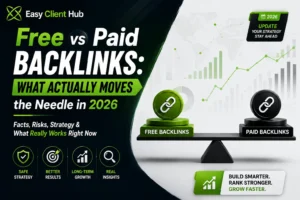
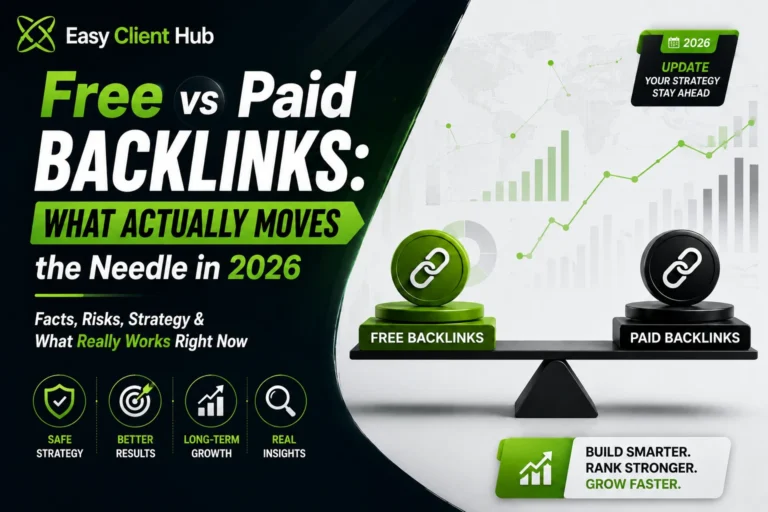
A free backlink is any link you earn without direct payment. That includes guest posts you write yourself and pitch to blogs, links from directories, links from journalists who quote you, or links people give you naturally because your content is genuinely useful.
A paid backlink is one where money changes hands to get the link placed. This could be a sponsored post, a niche edit on an existing article, or a link package bought from a marketplace. Some of these are legitimate advertising placements. Others exist purely to move rankings, which is exactly what Google’s guidelines prohibit.
That distinction matters more than the free/paid label itself. A $5 link from a spam network and a $400 guest post on a real industry blog are both “paid,” but they’re not remotely the same thing.
The Real Risk With Paid Links in 2026
Google’s spam detection has changed a lot over the past year. The October 2025 spam update specifically went after AI-generated guest post networks, meaning sites that were pumping out thin content just to sell links inside it. If you bought links from one of these networks even six months ago, there’s a decent chance that link is worthless now, or worse, sitting there as a red flag on your profile.
The old advice of “just don’t get caught” doesn’t really hold up anymore either. Google’s SpamBrain system processes link patterns in near real time now, not on a slow update cycle like Penguin used to run. Devaluation can happen within hours of a manipulative pattern getting flagged, not months later.
None of this means paid links are dead. It means cheap, bulk, low-quality paid links are dead. If you’re paying $20 for a link on a site that publishes 50 posts a day about unrelated topics, you’re not buying SEO value, you’re buying risk.
Where Paid Links Still Make Sense
We’re not going to pretend paid links never work, because for a lot of businesses, they genuinely speed things up. If you’re a new site with zero authority, waiting around for organic mentions can take years. A well-placed, relevant guest post on a site that actually gets real traffic can give you a head start you wouldn’t get otherwise.
The difference between a good paid link and a bad one usually comes down to a few things:
- The site publishing your link has real visitors, not just a domain rating number
- The content around your link is genuinely relevant to your niche
- The placement reads naturally, not like it was shoehorned in for the anchor text
- You’re paying for editorial quality, not just a slot in a bulk package
If a link checks those boxes, it’s closer to advertising than manipulation, and it tends to hold up fine over time.
What Free Backlinks Actually Cost You
Here’s the part people conveniently skip when they push “free backlinks only” as the answer: free doesn’t mean free. It means you’re paying with time instead of money.
Manual outreach, writing genuine guest content, pitching journalists, building relationships with site owners all of this takes hours, and often weeks before you see a single link land. If you’re running a business and doing your own SEO, that opportunity cost is real.
The upside is that free links built this way are almost always safer, more relevant, and more durable, because they weren’t built to trip a spam filter in the first place. If you want a starting list of places to build these without spending anything, we’ve put together a list of free high-quality backlink sites worth trying first, along with a full breakdown of how to get high-quality backlinks for free.
The Method Nobody’s Talking About: Digital PR and AI Visibility
This is where most free-vs-paid articles stop, and it’s also where the real opportunity sits right now.
Journalist platforms like Featured.com and Qwoted have basically replaced the old HARO model, and they’re producing something more valuable than a plain backlink: editorial mentions. Recent data shows these mentions correlate strongly with AI search visibility, meaning when tools like Google’s AI Overviews or ChatGPT pull information to answer a question, sites with strong editorial presence get referenced more often than sites with a pile of generic backlinks and nothing else.
That’s a meaningful shift. A backlink used to be valuable because it passed “authority” to your site. Now it’s also a signal that your brand actually exists in places AI models trust. This is essentially what AI SEO and LLMO is about, and if you’re only optimizing for the old ranking signal, you’re optimizing for half the picture. For the technical side of showing up in AI-generated answers, our guide on ranking in Google’s AI Overviews covers it in more depth.
Once You Build Links, Get Them Indexed
A backlink that Google hasn’t crawled yet passes zero value, free or paid. This step gets skipped constantly, especially with manually built free links sitting on smaller sites that don’t get crawled often. Submitting through Search Console and using ping tools helps, and we’ve covered the full process in how to index backlinks fast in Google if you want the exact workflow.
So Which One Should You Actually Use?
Realistically, the businesses that get the best results aren’t choosing one side. They’re mixing both, deliberately.
A reasonable split looks something like this:
- Use free methods (guest posts you write yourself, digital PR, resource mentions) as your foundation, because they’re safe and they compound over time
- Use paid placements selectively, only on sites with real traffic and genuine relevance to your niche
- Never buy links in bulk from a marketplace promising “50 links for $99.” That’s the exact pattern Google’s spam systems are built to catch
- Track what you build. If you don’t know where your links are coming from, you can’t tell what’s helping and what’s quietly hurting you
If you’re a small business just starting out, lean free first. It’s slower, but it builds a profile that won’t collapse the next time Google updates its spam detection. Once you have some baseline authority and a bit of budget, selective paid placements can genuinely speed up growth without adding real risk.
Conclusion
The free-vs-paid debate isn’t going away, mostly because both camps are defending something that’s partly true. Free links are safer but slower. Paid links are faster but riskier if you’re not careful about where the money goes.
What actually moves the needle in 2026 isn’t the price tag on the link. It’s whether the link comes from a real site, in a relevant niche, that a real person would actually click. Everything else is just detail.
FAQ
Are paid backlinks worth it in 2026?
They can be, but only when they come from real, relevant sites with genuine traffic. Bulk paid links from low-quality marketplaces are more likely to hurt you than help.
Can free backlinks hurt my SEO?
Free backlinks aren’t automatically safe. Low-quality directories, automated link-building, comment spam, and irrelevant sites can create a poor-quality link profile. The safest approach is to focus on links that are genuinely relevant and useful rather than simply collecting as many free links as possible.
How many backlinks do I need to rank?
There’s no fixed number. Quality and relevance matter far more than quantity, so a handful of strong links can outperform hundreds of weak ones.
Is buying backlinks against Google’s guidelines?
Yes, if the link is bought specifically to pass ranking authority. Sponsored content disclosed properly, or links bought for genuine traffic, are treated differently.
Do backlinks still matter for AI Overviews and LLMO?
Yes, but the type of link matters more than before. Editorial mentions and citations that AI models can trust now carry more weight for AI search visibility than plain volume-based backlinks.