
Building backlinks is only half the job. If Google never discovers and indexes the page your link sits on, that backlink passes zero SEO value it’s invisible to your rankings, no matter how strong the link itself is.
This guide covers why backlinks stay unindexed, how Google backlink indexing actually works in 2026, expert-level fixes that go beyond the basics, and what genuinely speeds up backlink discovery because most “instant indexing” tools don’t touch Google at all.
Quick Answer
To index backlinks fast in Google: submit the linking page’s URL through Search Console’s URL Inspection tool, make sure it’s linked internally from an active, already-indexed page, and keep your sitemap current. Skip IndexNow-based tools for Google specifically they only reach Bing, Yandex, Naver, and Seznam. The fastest real lever for backlink crawling is earning links from pages Google already crawls frequently.
Why Backlink Indexing Matters for Rankings
Search engines only pass authority through links they’ve crawled and stored in their index. An unindexed backlink:
- Passes no trust or authority signal to your site
- Won’t show up in backlink checker tools pulling from Google’s index
- Makes part of your link-building budget go to waste
If you’ve invested in a professional backlink building service, indexing is the step that actually converts that spend into ranking movement. A link nobody’s index has found yet is just a URL sitting on a page.
Why Your Backlinks Aren’t Getting Indexed
Understanding how Google discovers backlinks in the first place makes this much easier to diagnose. Google finds new URLs by following links from pages it already crawls, reading sitemaps, and revisiting pages at a frequency based on how “important” it judges them to be. When that discovery chain breaks, indexed backlinks never happen no matter how strong the link itself is.
A few patterns explain most backlink crawling failures:
The linking page has low authority. New pages with no internal links pointing to them and little to no traffic rarely get crawled often.
Poor site structure on the linking domain. If the page is orphaned not linked from that site’s own navigation or other content crawlers may never find it at all.
Low-quality or spammy placement. Links dropped on thin directory pages, abandoned forums, or link farms sit in parts of the web Google rarely revisits.
The page is genuinely new. Discovery takes time. A backlink placed yesterday on a brand-new page might not get crawled for days or weeks.
No secondary discovery signal. A backlink with nothing else pointing search engines toward that page — no sitemap entry, no social share, no additional link has to wait for Google to stumble onto it organically.
What Actually Speeds Up Google Indexing (Expert Tips)
Here’s where most guides mislead people: Google does not support IndexNow, the protocol many “instant indexing” tools are built on. IndexNow only notifies Bing, Yandex, Naver, and Seznam not Google. Any tool promising “instant Google indexing” through IndexNow alone isn’t telling you the whole story.
Google’s own Indexing API is real, but it’s restricted to two content types: job postings and livestream pages. It isn’t a general-purpose channel for backlinks or blog content, and using it outside that scope can flag your account for misuse.
Pro tip #1 — Prioritize link placement over link volume. One backlink from a page Google crawls daily beats ten backlinks from dormant, low-authority pages. Before chasing more links, audit whether your existing ones sit on active pages.
Pro tip #2 — Build a “discovery path,” not just a link. After securing a backlink, add one more low-effort signal pointing to that same page a social share, a mention in a related guest post, or a link from another page you control. This is how professional link builders push indexing without touching Google’s restricted tools.
Pro tip #3 — Treat your sitemap as a living document. Many sites submit a sitemap once and forget it. Regenerate and resubmit it whenever you add pages your backlinks live on this keeps Google’s crawl queue current instead of stale.
Pro tip #4 — Watch your crawl budget, not just your content. Sites with thousands of thin, low-value pages spread Google’s crawl budget thin, which slows down discovery of your genuinely important pages including the ones hosting your backlinks. A technical SEO audit will surface this fast.
The Real Methods That Work
- URL Inspection in Search Console submit the specific page and request indexing. Still the most direct, free signal for a standard page.
- Keep your sitemap current and submitted.
- Link the page internally from content Google already crawls regularly.
- Earn a link from a site Google indexes frequently this remains the single biggest lever for discovery speed.
Indexing Tools Compared: What Actually Reaches Google
| Tool / Method | What It Actually Covers | Reaches Google? | Cost |
|---|---|---|---|
| Search Console URL Inspection | Manual per-page indexing request | ✅ Yes | Free |
| XML Sitemap Submission | Full-site discovery signal | ✅ Yes | Free |
| Google Indexing API | Job postings & livestreams only | ✅ Yes (limited scope) | Free |
| IndexNow Protocol | Bing, Yandex, Naver, Seznam | ❌ No | Free |
| Rank Math / Yoast Premium | Sitemap + submission automation | ✅ Yes (via sitemap) | Paid plugin |
| Paid “bulk indexing” services | Varies — often link networks | ⚠️ Inconsistent, some risk | Paid |
The takeaway: if a tool’s main pitch is “instant Google indexing” through IndexNow, that claim doesn’t hold up it’s solving a Bing/Yandex problem, not a Google one. Before paying for any backlink indexing service, ask specifically which of these it uses most rely on sitemap resubmission and internal linking, not a secret Google-only channel.
How to Index Profile Backlinks
Profile backlinks (author bios, forum profiles, community pages) get indexed less often because the hosting pages are usually low-activity. To improve their odds:
- Fill out the profile completely instead of leaving it minimal
- Keep the account active inactive profiles get crawled less
- Link to the profile from at least one place search engines already visit, such as a blog comment, guest post, or Web 2.0 property
If you’re actively building this type of link, pairing it with a broader guest posting strategy tends to produce far more consistent indexing than isolated profile links alone.
How to Check If a Backlink Is Indexed
Search the exact linking page URL directly in Google using site:yourdomain.com/page-url. it appears, it’s indexed. If it doesn’t, the page likely needs a stronger discovery signal internal linking, a fresh sitemap submission, or a link from an already-crawled page.
If you’re seeing pages get crawled but never indexed, that’s a distinct issue worth troubleshooting separately see our guide on fixing “crawled but not indexed” errors in Search Console.
Checking this monthly for active campaigns tells you which links are actually contributing to rankings and which need a push. This kind of routine audit is what separates a one-time link indexing effort from an ongoing backlink discovery process that keeps working as you scale your outreach.
How Long Does Indexing Actually Take?
For pages with at least one link from an established, well-crawled site: often a few days to two weeks. For orphaned pages on low-authority sites with no discovery signals: it can take months, or may never happen.
Speed correlates almost entirely with how well-connected the linking page is not with which submission tool you use. If your whole site struggles with this, it’s worth reading why your website might not be indexing at all, since the root cause is often site-wide rather than link-specific.
Building on This: Related SEO Fundamentals
Backlink indexing doesn’t work in isolation it’s one piece of a wider authority-building system:
- Understand what backlinks are and how they influence rankings if you’re newer to link building
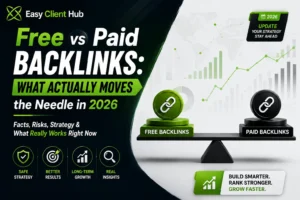
- Explore free, high-quality backlink sources worth targeting before paid options
- Strengthen your site’s overall trust signals with our E-E-A-T improvement guide
- If you manage multiple properties, keep track of changes with our Search Console platform update guide
Conclusion
Indexing is the step that turns a backlink from a URL into an actual ranking signal and most of the “instant indexing” advice circulating in 2026 overpromises on tools that were never built for Google in the first place. IndexNow won’t do it. The Indexing API won’t do it for standard content. What actually moves the needle is far less exotic: request indexing manually for priority pages, keep your sitemap current, and prioritize earning links from pages Google already trusts and crawls often.
If you take away one thing from this guide, make it this: backlink indexing isn’t a tool problem, it’s a discovery problem. Every fix above internal linking, sitemap hygiene, choosing well-crawled linking pages exists to give Google a clearer path to the page your link lives on. Get that path right once, and every backlink you build afterward gets indexed faster with less manual effort.
Struggling to get backlinks indexed at scale, or unsure whether your current link-building efforts are even being crawled? A professional backlink service can audit your existing links and fix the discovery gaps for you.
FAQs
Does IndexNow work for Google indexing?
No. IndexNow is used by Bing, Yandex, Naver, and Seznam. Google has not adopted the protocol as of 2026.
Is the Google Indexing API useful for backlinks or blog posts?
Not directly it’s officially limited to job posting and livestream content. Using it outside that scope isn’t a supported method and can risk your API access.
What’s the fastest free way to index a backlink?
Submit the linking page’s URL through Search Console’s URL Inspection tool, and make sure it’s linked internally from an active, already-indexed page on that site.
Why is my backlink still not indexed after weeks?
It’s almost always a discovery problem the linking page is orphaned, low-authority, or missing from an updated sitemap. Adding one strong internal or external link to that page is usually the fix.
Does link volume matter more than link placement for indexing speed?
No. A handful of backlinks on active, well-crawled pages will get indexed faster than dozens of links sitting on dormant or low-authority pages.
Can too many low-quality backlinks hurt indexing of my good ones?
Indirectly, yes. If your crawl budget or site trust is diluted by spammy signals, Google may crawl your site less frequently overall, slowing discovery even for your strongest links.
Written by Aoon Muhammad, SEO Specialist at Easy Client Hub.